0 to 1 Design
Modern Parenting
Screen Time
[2025]
Overview
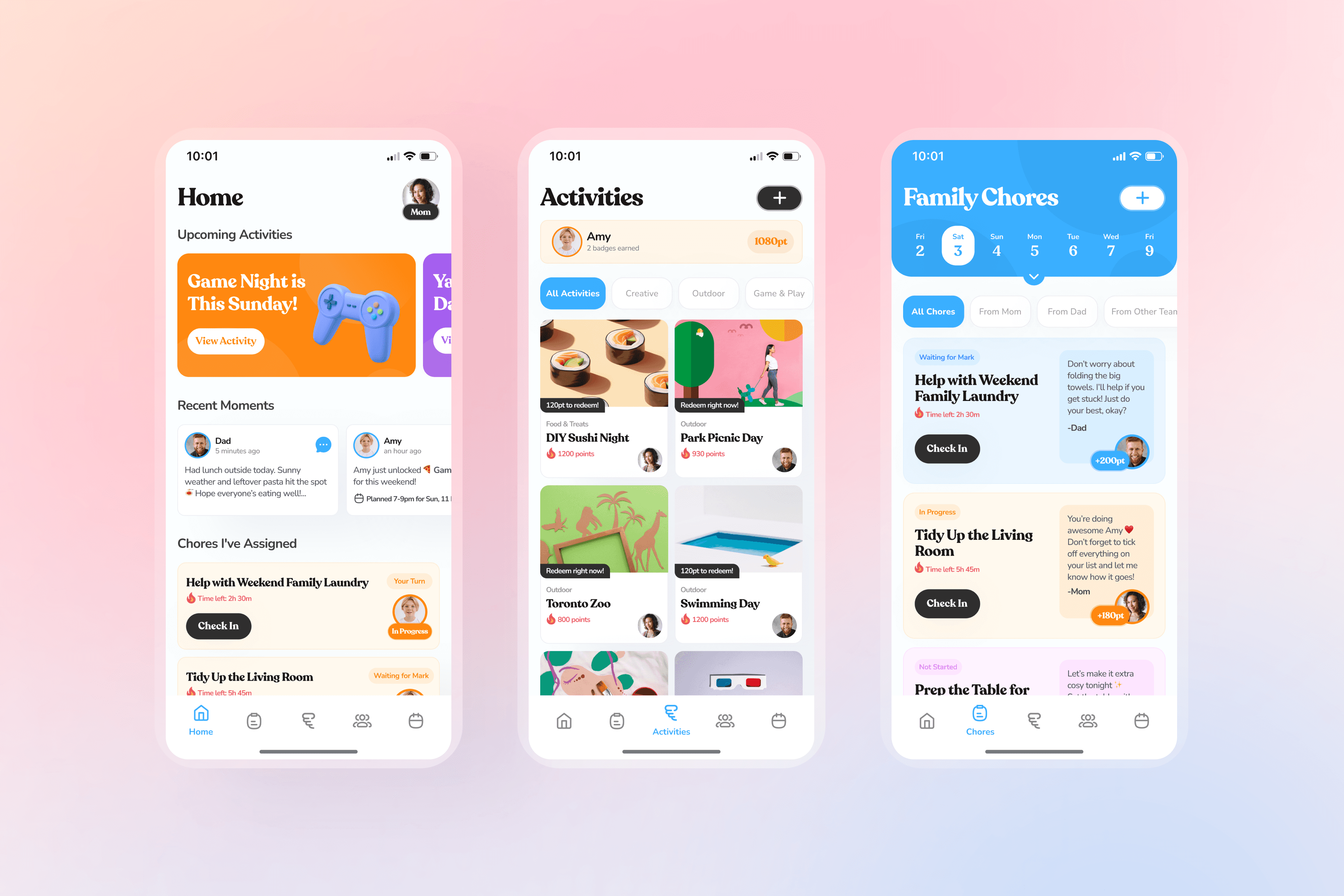
FamLoop is a family app that helps parents and children stay connected in their everyday routines. Through chores, in-app chat, and shared activities, it turns daily tasks into supportive and rewarding experiences, addressing the challenges of modern parenting and screen time.
My Role
Research, User Interview, Conceptualization, Prototyping, User Testing, Visual Design
Duration
January - March (3 months)
Prototype
Introduction
How much time do families truly share at home?
I grew up in a busy home with two younger siblings. My parents always made time for us. We played outside, did chores together, and talked at the dinner table. Those moments happened naturally and often.
In many modern families, shared time is getting difficult.
Families still live together, but attention is split between work, devices, and different schedules. Screens fill the quiet gaps.
By the time everyone is free, energy is low and small moments pass by. What used to happen naturally now needs simple ways to fit connection into daily routines.

The Problem
Living together no longer guarantees connection.
I started with literature review to understand how modern habits shape family time. In fact, shared moments are shrinking while individual screen use and fragmented attention are rising.
Less time for connection
55% of working parents struggle to balance work and family, leaving less time with their children.
Parental absence
7 in 10 children with busy parents face emotional or developmental challenges from limited parental presence.
4+ Hours screen time
Half of U.S. teens spend 4+ hours daily on screens, leaving fewer chances for family interaction.
Talking to Families
What does family daily connection look like?
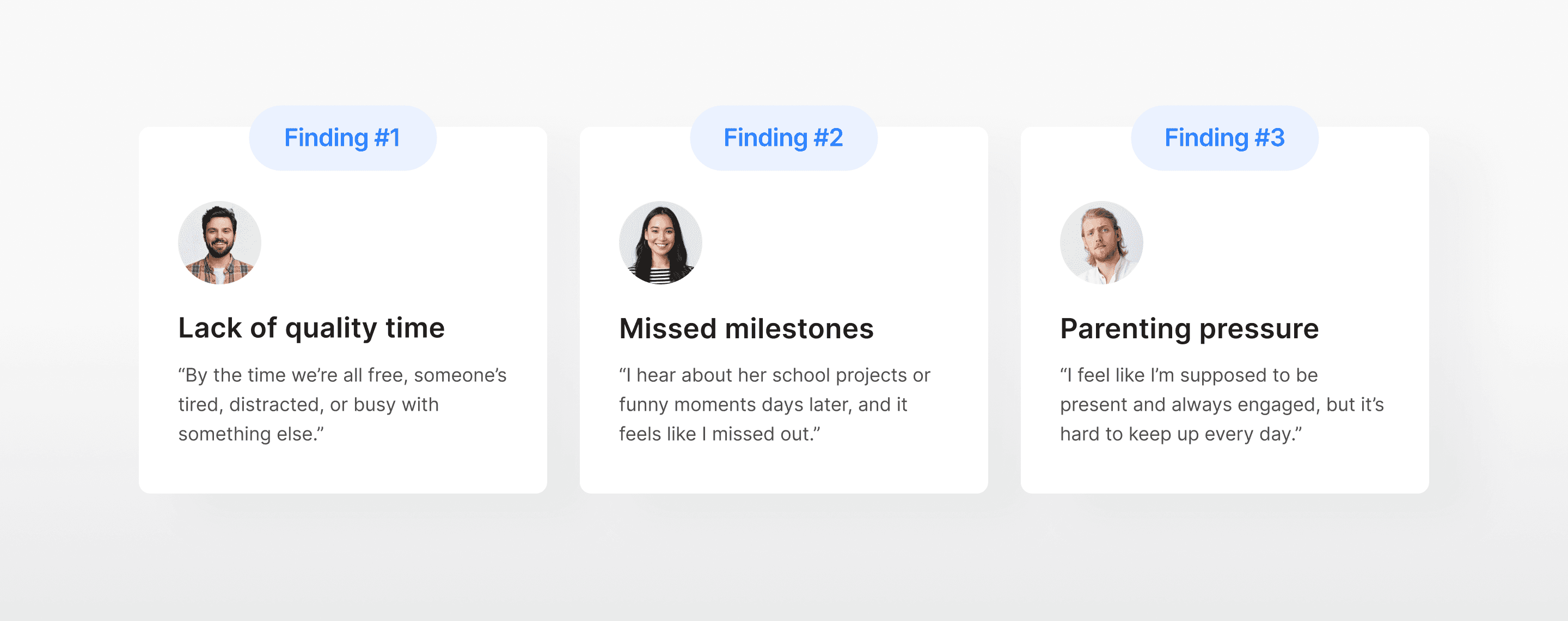
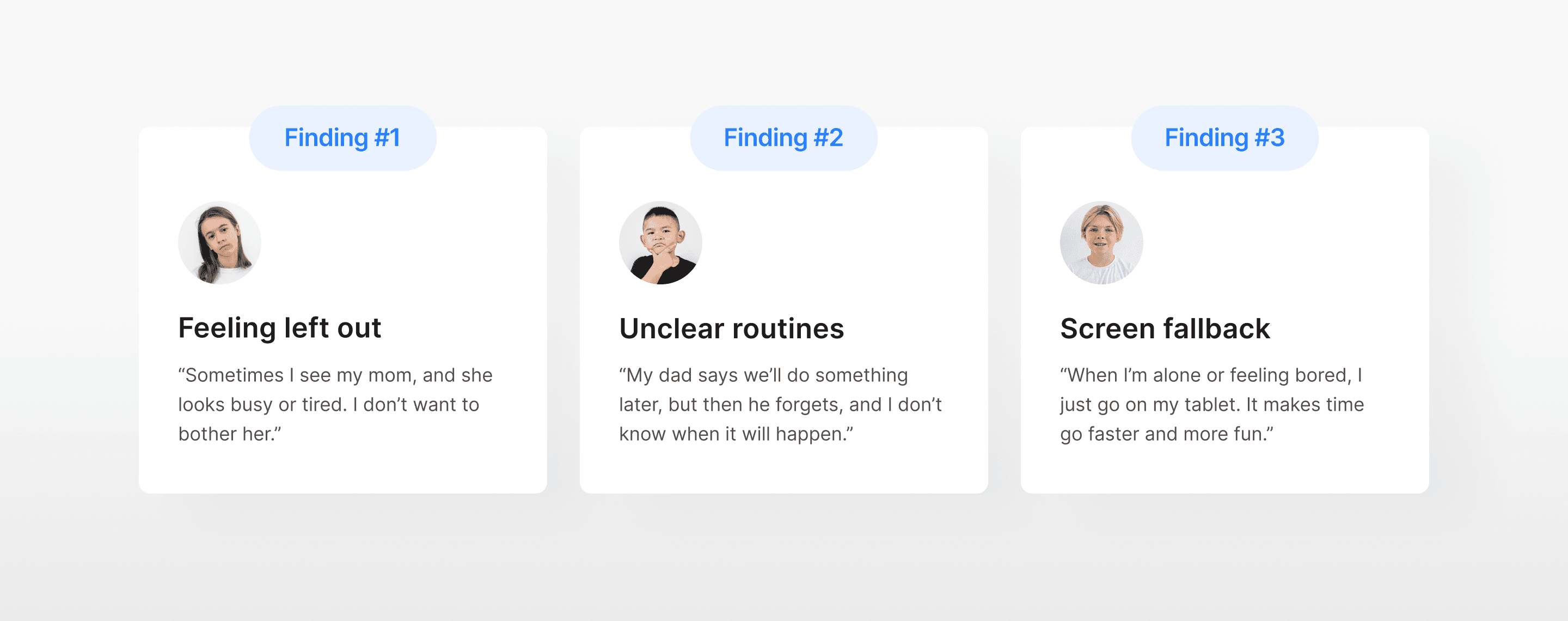
I spoke with two families including one dual income and one single parent. My goal was to see when families naturally connect in the middle of their busy routines and what tends to get lost.
Dual-income/Single parents
Children (Ages 8 and 11)
Affinity Mapping Result
Synthesizing the findings into key insights
I looked at some overlaps between the two user types, focusing on their routines, screen time gaps, and emotional needs.
Chores as a key touchpoint
Parents and kids struggle to find time, but chores always happen, making them a reliable moment for connection.
Micro moments exist
When left alone, kids fill short gaps with screens, while parents miss the chance to share in those everyday moments.
Positive exchanges matter
Kids hold back when parents look tired, so even small praise or encouragement can make them feel noticed.
Market Research + Opportunity
Rapid growth of parenting apps in the global market
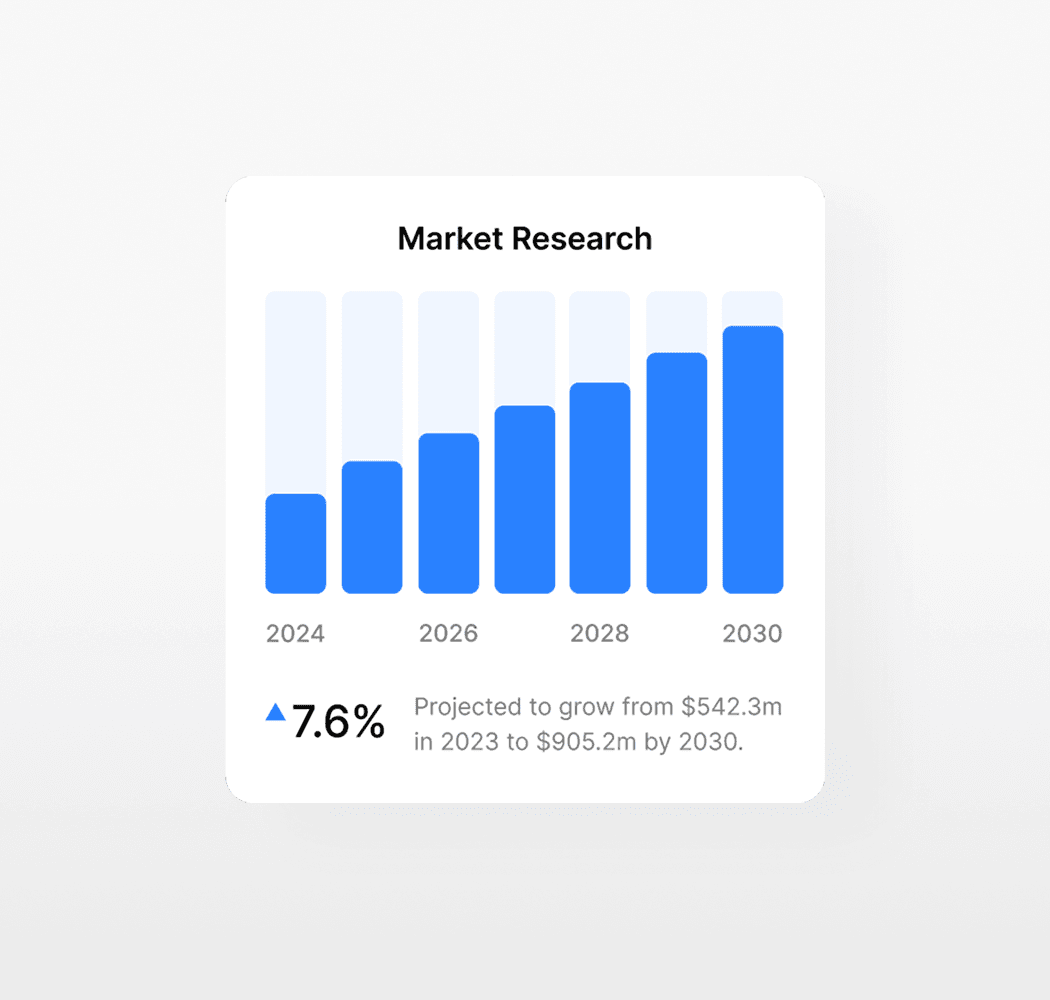
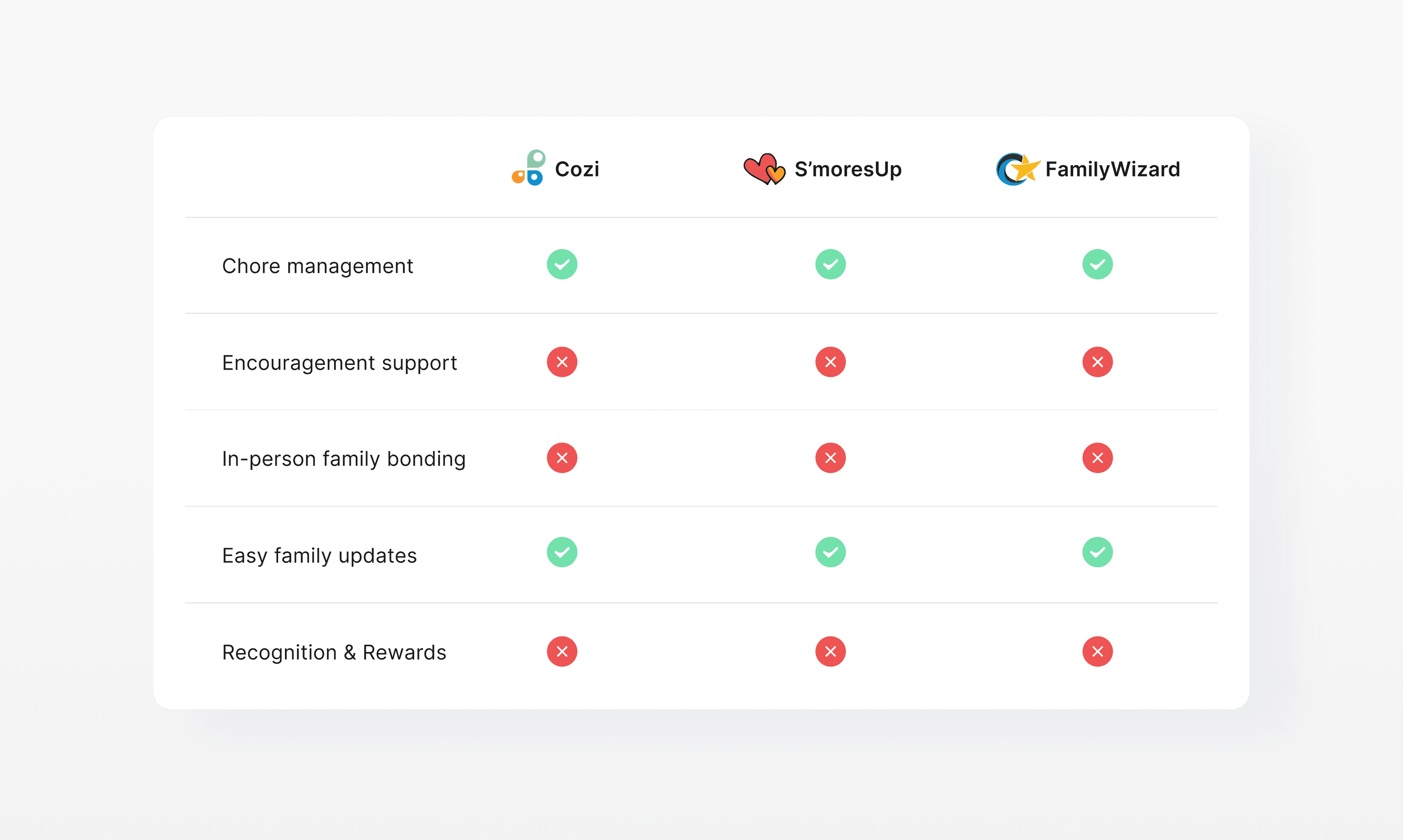
But, none of the apps foster emotional connection, focusing on daily logistics.
I reviewed three leading parenting apps focused on schedules, tasks, and reminders, and found they prioritized coordination over connection.
Design Challenge
How might we help busy parents stay connected with their children even when time and energy are limited?
I then turned the interview overlaps and the market gap into one guiding question with these goals.
Conceptualization
Transforming a daily chore into a meaningful shared memory
I created this task flow to capture how a simple household chore can shift from a solo responsibility into a shared moment of connection. I chose this scenario because in many busy households parents are often absent, leaving children to handle chores alone.
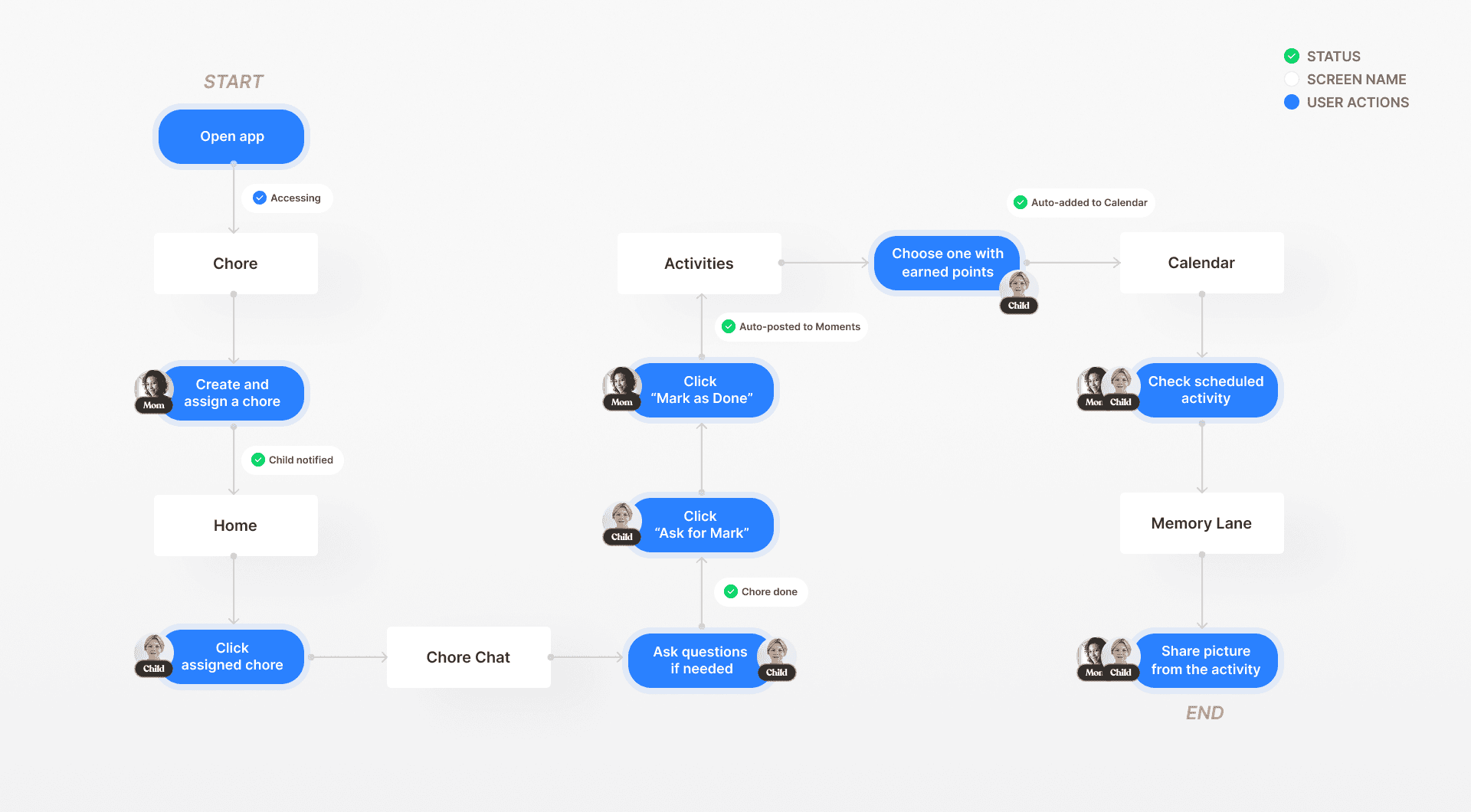
Let’s picture how it works and test this initial prototype!
This allows parents to turn everyday tasks into opportunities to encourage, support, and strengthen their bond with their child.
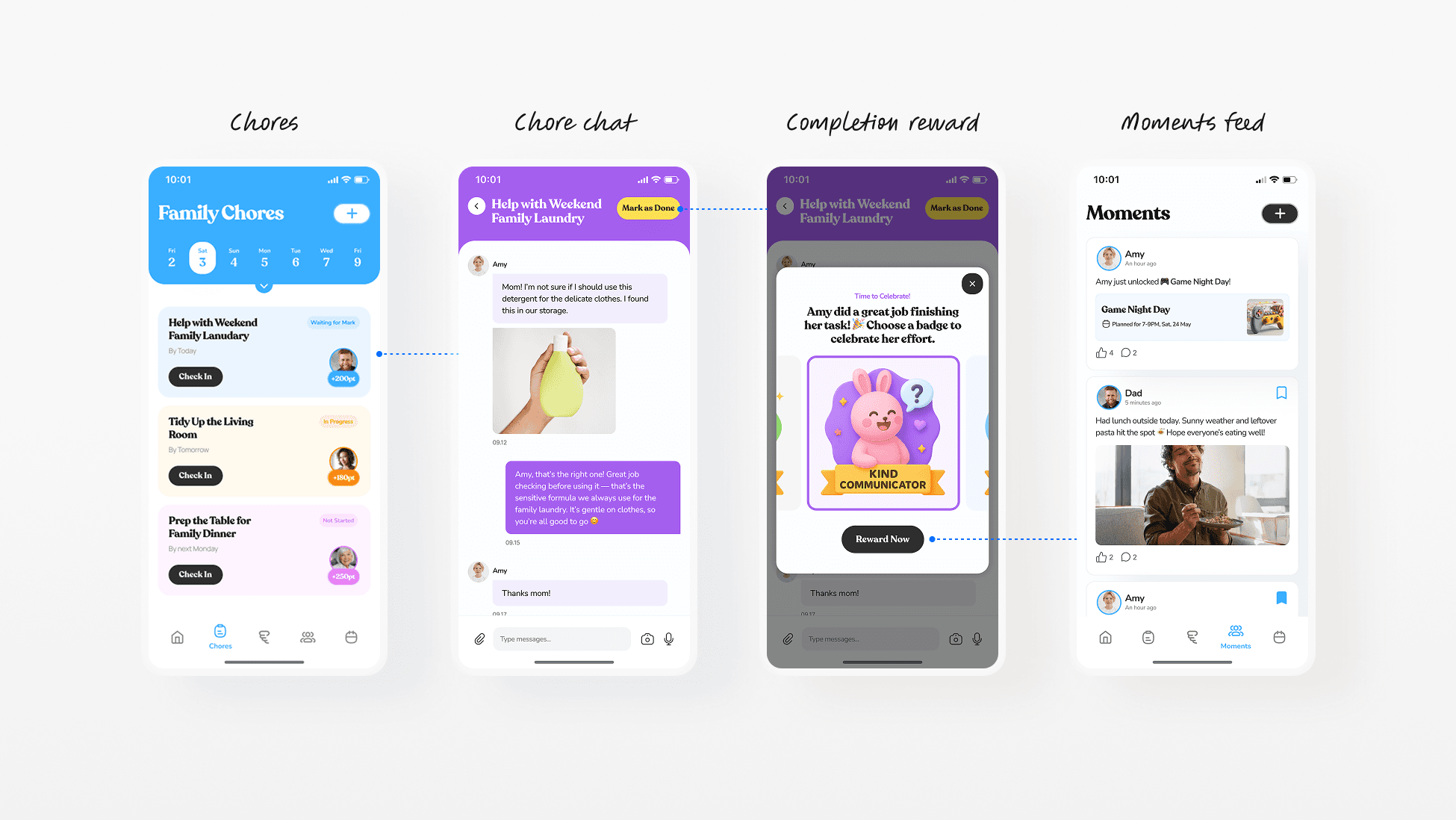
[Initial prototype version]
Design Iteration for Main Flow
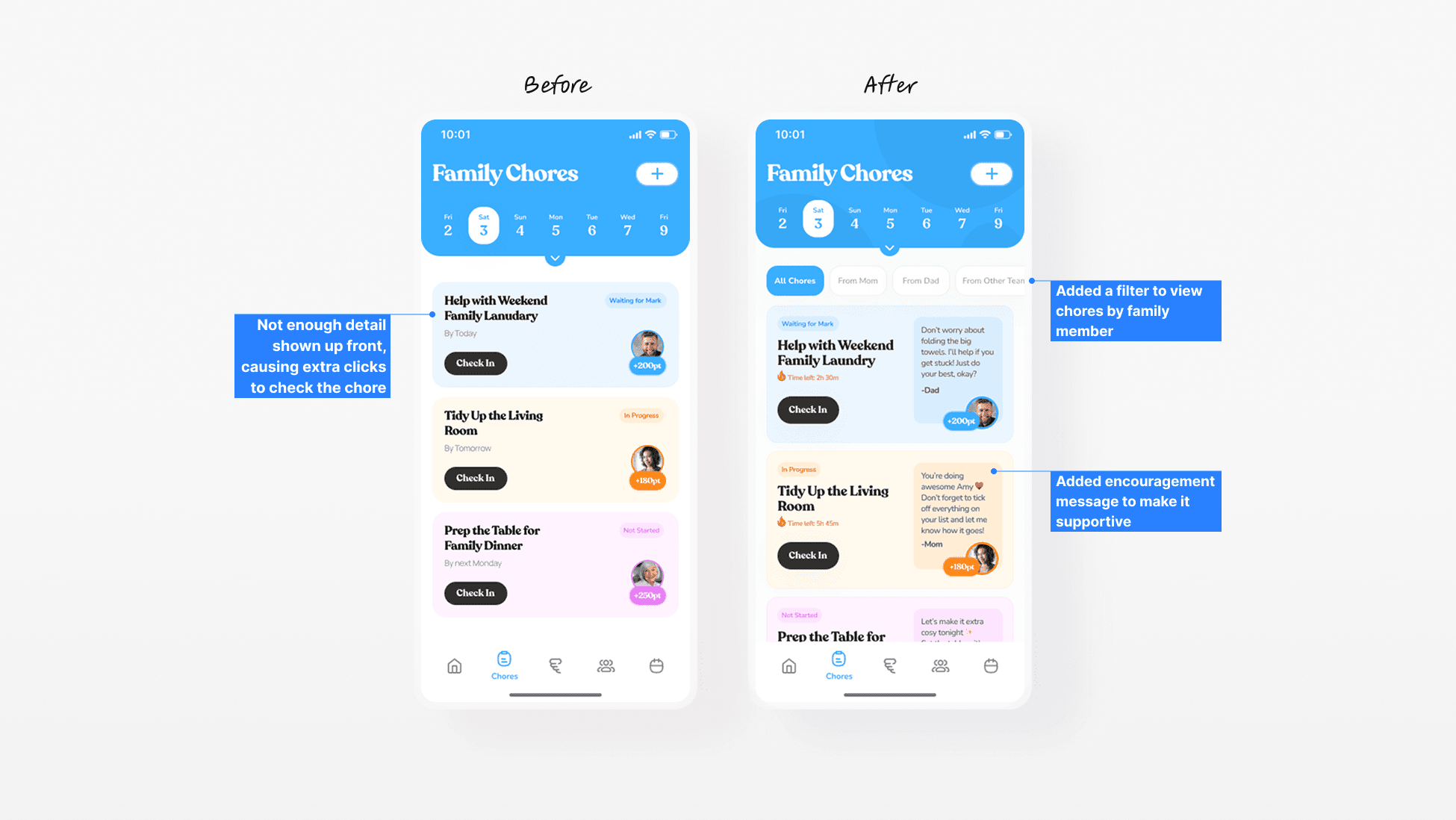
Iterating the prototype and incorporating feedback
I tested it with the two families from my interview. My goal was to see if the flow not only made chores easier to manage, but also built in encouragement, recognition, and connection between parents and children.
Final Design
Helping families turn daily routines into bonding opportunities
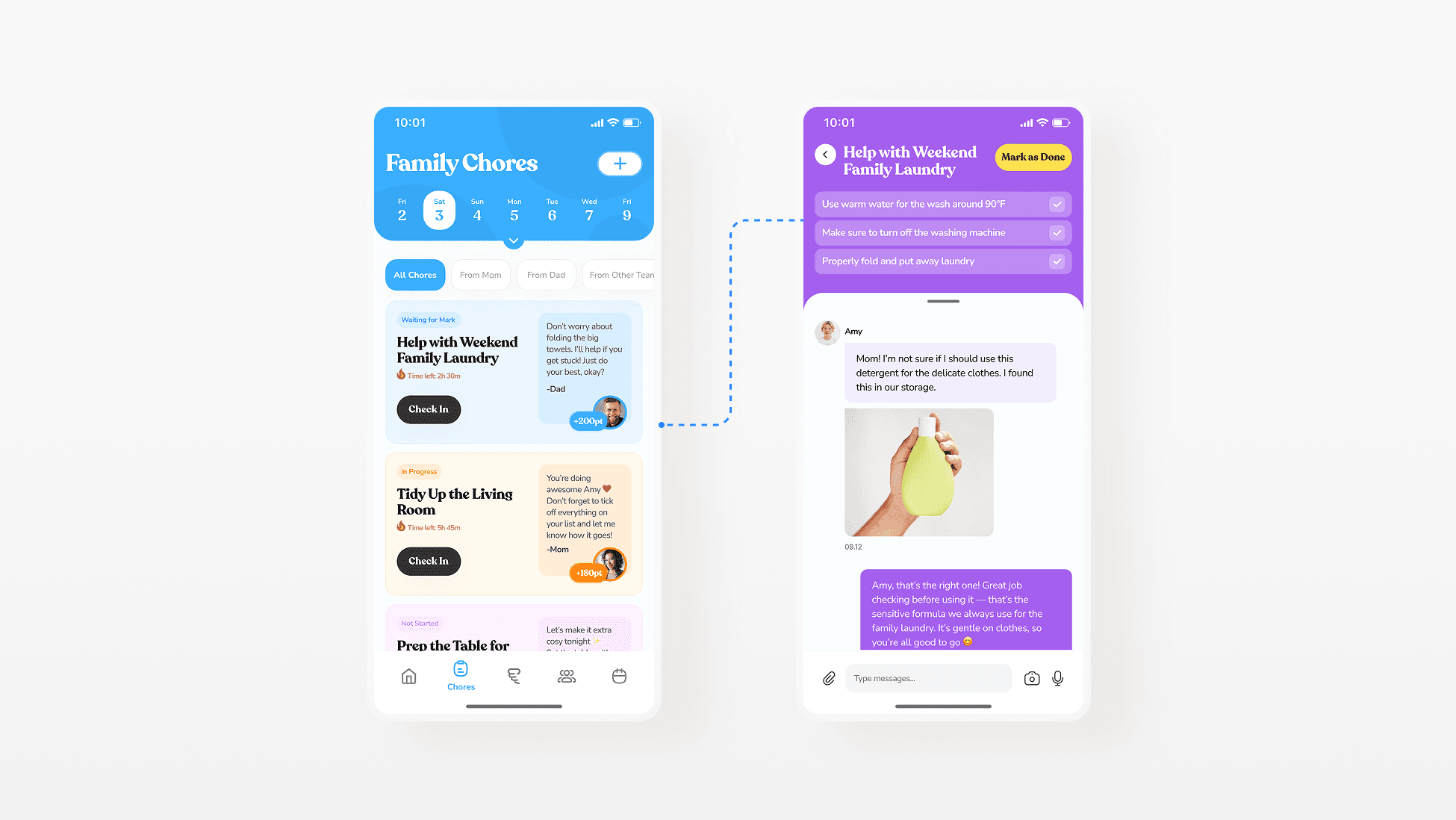
Assign chores with built-in guidance
Parents assign chores with clear steps, while kids follow checklists and ask questions in chat. Guidance and encouragement stay in one place.
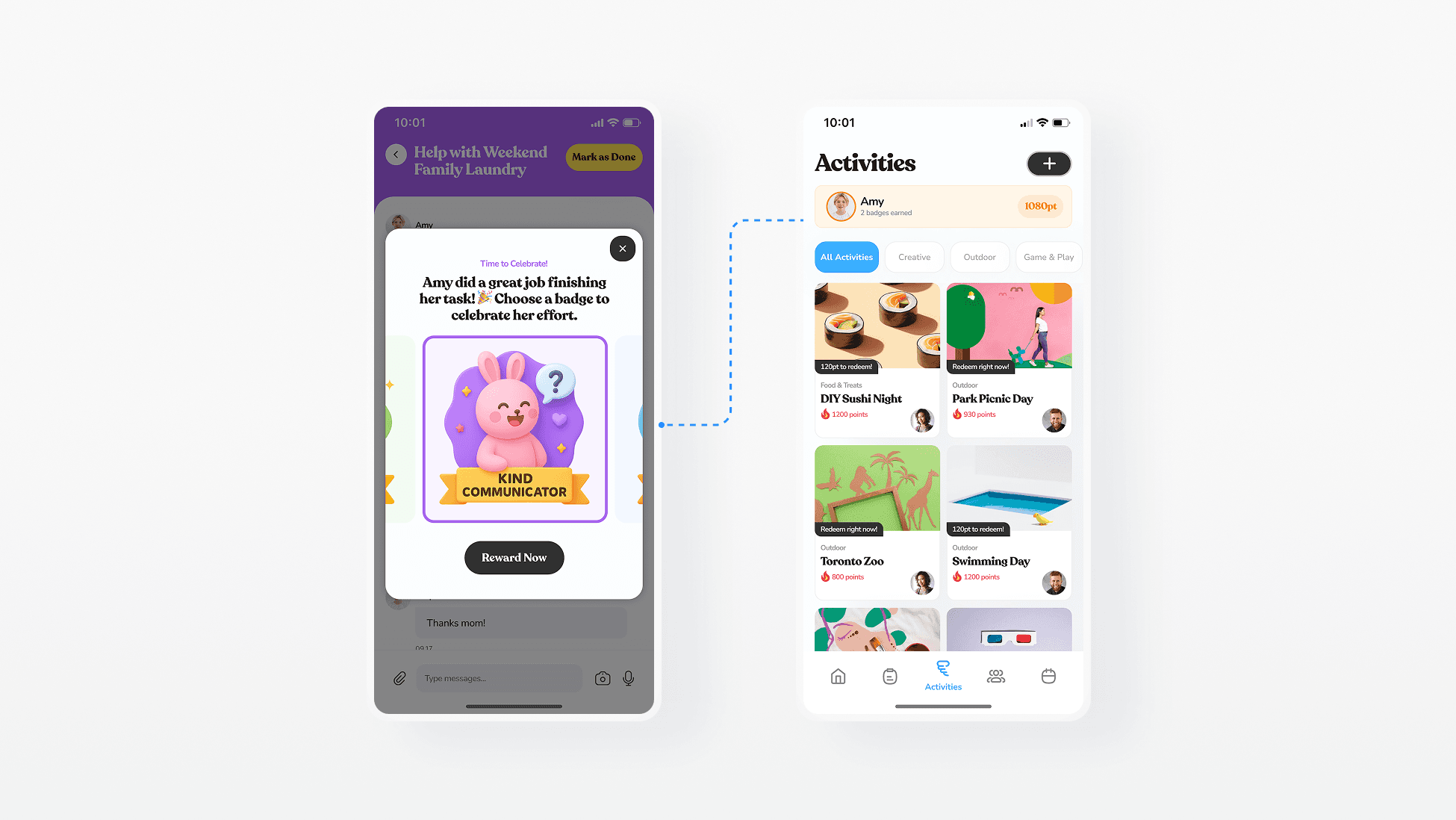
Turn routines into shared rewards
Kids earn points for chores and redeem them for family activities, making everyday routines something to look forward to together.
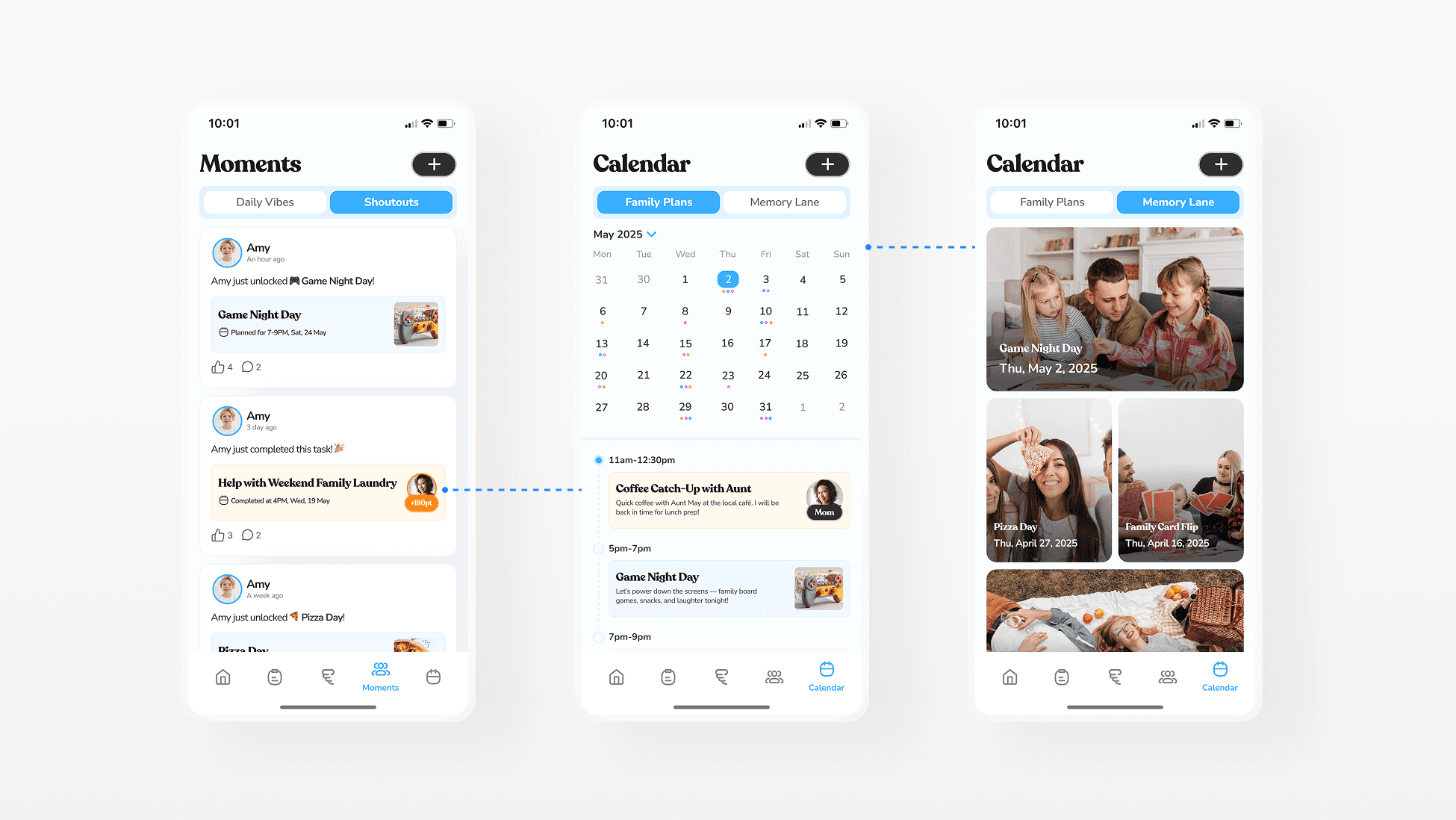
Capture moments, plan memories
Family members share updates and celebrate milestones in a feed, while activities flow seamlessly into the shared calendar.
Signing Off
What I learned
This project gave me a valuable chance to practice the full end-to-end design process, wearing different hats as a researcher, visual designer, and interaction designer. If I had more time, I would love to expand this into an onboarding flow and test it with more families to fine room for further improvements.